
 This is a guest post from Dynistics who were an exhibitor at our Technology and Social Media Showcase event around how dashboard technology can drive value from data and enable recruiters to be more agile, responsive and predictive in their business management.
Recent figures from the Office of National Statistics (ONS) show the proportion of workers “matched” to their jobs is steadily declining, with one in three people in the wrong job. This is further supported by the latest Chartered Institute of Personnel and Development (CIPD)/Halogen Employee Outlook report, which this spring surveyed over 2,000 UK employees and discovered that job satisfaction has fallen across the board, but particularly in the private sector.
So what can be done to reverse the trend? Data driven recruitment should be a given for successful talent management but for the most part, recruitment firms remain wary of fully embracing it, with nearly one in three (31%) recruitment professionals aren’t taking full advantage of the data insights into the skills of the wider workforce now available. However, big data, when harnessed effectively, saves recruiters time, ensures that vacancies are filled by the right individuals more quickly, and that candidates are matched with the right role; something that apparently isn’t happening at the moment. So with so much to gain, why do many recruitment firms struggle with effective data management?
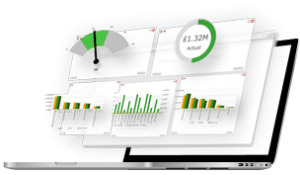
For many recruiters the issue they face is that they have too much data and they struggle to unlock the value or streamline their data into the few key pieces of information that they need. In short, is it just too big for them to handle? This is where technology comes into its own. Recruiting analytics dashboards cut out the excess information and focus on the relevant data. They make it easy for recruiters to understand the data, helping them to make the shift to data-driven decision-making and increasing their productivity and agility by bringing more transparency to key performance indicators (KPIs) and processes.
So how can dashboards ensure recruiters can deliver the best candidate matches?
- Real-time view of operations: Recruitment agencies have specific challenges in that they tend to operate a network of branches that use a centralised CRM platform as well as multiple social media channels through which to reach candidates. Having a dashboard is therefore critical to ensure agencies can gain an immediate, real-time view of operations with which to map performance, identify trends and help predict future opportunities or the need to change priorities.
- Flexibility: Dashboards give a quick and easy view of current performance with the ability to drill down into any chosen area of the business and the flexibility to allow for customisation. Rather than overloading them with data, this allows team leaders and individual recruiters to see immediately the priority roles and candidate availability.
- The ability to highlight workload priorities: Dashboards clearly show bottom line revenue. This gives recruiters an objective method to improve their performance and work smarter as it provides the ability to look at specific stages in the job pipeline and prioritise workload based on how close job orders are to completion.
- Making social media data more manageable: Over a quarter of the recruiters surveyed in The Chartered Institute of Personnel and Development’s (CIPD) Resourcing and Talent Planning Survey 2015 cited professional networking sites such as LinkedIn now amongst their top four methods for attracting higher-level candidates. However, harnessing this data takes time that many agencies simply don’t have. Having a dashboard is therefore critical to place these candidates in the right roles to drive business forward and enable them to be more agile and responsive.
- Providing insight into talent pipeline: Dashboards enable recruiters to quickly and easily understand the candidate pipeline and monitor candidate throughput, conversion and fill rates. Geographical mapping highlights, in real-time, where current jobs and candidates are and quickly see the right opportunities. This shows where focused action will produce results, and increases the efficiency of candidate recruitment by specific sourcing for live roles. It also enables the canvassing of prospective clients by location.
- Analysing performance to increase motivation: Candidate motivation is critical to sustaining revenue growth. By delivering an instant and complete picture of team performance, team leaders can investigate an individual’s productivity by dynamically interrogating their activities and identifying where to focus attention for improved results. When a best performer has a good quarter, dashboards enable colleagues to see what activity lies behind the win, creating a competitive environment. Dashboards have been shown to increase collaboration and knowledge and best-practice sharing, too.
By helping recruiters to make better use of the information they hold, the data-driven recruiting that dashboards provide can be a significant source of competitive differentiation and business advantage. For more information about how you can gain control of your data to drive your business growth, visit our website or get in touch directly; we’re always keen to hear from you to understand challenges and get feedback. You can also look at some of our Recruitment Dashboard Demos we have created to showcase how Active Dashboards can add value to your business.