

 This is part of a series of blog posts written for UK Recruiter by the team at BlueSky PR
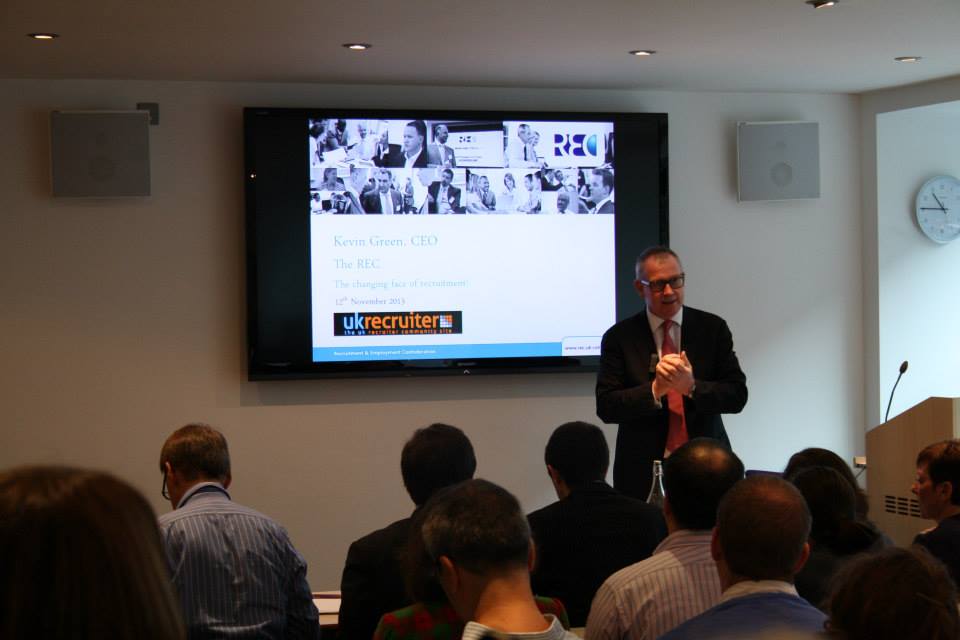
The annual UK Recruiter conference kicked off with an engaging presentation by REC CEO, Kevin Green who outlined reasons to feel positive about the recruitment sector as well as giving us a breakdown of market statistics.
According to research conducted by the REC :
• The recruitment industry now turns over £26.5bn per year with £24.1bn of this coming from the contract and interim markets and £2.4bn on permanent.
• The permanent market is up 2.2% from this year last year (12% in volume) while the contract market has grown 3.2% (2%).
• The economy dropped 7% in 2008 but the recruitment industry alone dropped more than 30%.
• Recruiters are now working for less than they have done historically. Permanent consultants were bringing in average sales of £96,954 pre-recession which has now dropped to £83,955.
• The industry is expected to grow bigger than ever before in the coming years. Realistic projected figures predict £30.9bn by the end of 14/15 and £33.5bn by the end of 15/16.
We were also told that although vacancies were expected to rise at the sharpest rate for 6 years, this would not spell the end for residual unemployment. Skill shortages will continue at the top and bottom of the market with low paid work faring badly along with senior roles in I.T, engineering and creative design. This does mean however that there will be expected salary increases as the market reacts to decreasing candidate availability.
Of particular interest was the information on changing social attitudes to work in the UK. In 1991 only 17% of graduates wanted to be freelance or self-employed. By 2011 this had risen to 83%. This was credited to the growth of celebrity culture and programmes like The Apprentice and Dragons Den that promote entrepreneurial spirit without highlighting any of the downsides of being self-employed.
All of this means that if you want to be successful in recruitment in the future, you should follow one of these three models:
‘The Specialist’
This represents an expert in their field who has exceptional knowledge of their markets which would often be very narrow or ‘inch wide, mile deep’, as Kevin put it. They’ll know where the talent is, be able to effectively utilise social media and have a global reach. Their people will offer a truly consultative approach.
‘The Low-Cost Operator’
This is a low margin, high volume business that works with the contingent market and is an effective operational processor. They’ll be process heavy, excellent at winning tenders and have usually grown through acquisition. Their consultants will be operators rather than true consultants.
‘Traditional Plus’
This is a full service, branch model that has consolidated to one site. They avoid all large corporations and focus on start-ups and SMEs to attempt to grow with their clients. They will have a regional rather than national or international focus and will offer clients onsite offering.
Thanks to Kevin for a fascinating presentation.