
 This is a great article, and topic, written for us by Rachael Moss, Group Marketing Director, at our partners Erecruit.
3 weeks. 3 recruitment events. 1 key theme: diversity.
Whilst the topic isn’t new, it feels like the appetite and receptiveness to talk about it is. Brave and knowledgeable advocates are putting themselves on stage to open up the dialogue. And it appears that people are wanting to listen. Really listen. There’s a positive energy in the room and copious note-taking. A feeling that we might be on the tipping point of wanting to embrace all forms of diversity and realise more inclusive workplaces.
Why now?
Diversity has been catapulted onto the agenda with skills shortages challenging virtually every industry sector – from engineering to education and healthcare – meaning, to put it bluntly, that companies need to widen their talent pools.
With unemployment at record lows and ongoing uncertainties around Brexit impacting immigration why would recruiters ignore the 1 in 5 potential employees that experience some form of disability? Or the 1 in 7 people in the UK that are neurodivergent (including those with attention deficit disorders, autism, dyslexia and dyspraxia). Or older workers who in previous generations would have already retired? Or any other underrepresented group of society such as the 13% that are BAME in the UK? Understandably, according to a recent survey by TalentBoard, diversity and inclusion was rated as a top 5 employer priority.
But it’s not just the economic imperatives and well documented benefits of having a more diverse workforce that is driving the change. Diversity is not just a top business priority, but also a human opportunity. We all grow by being around and challenged by people with a different mindset or background, giving us a new perspective.
There’s a seismic cultural shift towards speaking out about inequality in all its forms, aided by social media. There’s a greater openness about mental health issues, with even royal voices coming out to destigmatise and back the cause. There are more role models and people willing to speak out about their own personal circumstances and experience to help inform others.
With schools more on board with the concepts of inclusion and less tolerance of bullying this next gen workforce will thankfully have greater expectations of a diverse workplace. Alongside growing up with other children who openly identify for example as transgender or gay, they are encouraged to develop in the school curriculum subject in England of Personal, Social, Health and Economic (PSHE) education “the knowledge, skills and attributes to keep young people healthy and safe and to prepare them for life and work”.
Why has it taken so long?
Let’s assume on the whole that businesses like to get things right. With diversity comes the fear of getting it wrong. Fear of asking inappropriate questions, fear of offending, fear of disrupting existing teams, fear of not being able to support in the right way.
The unknown cost of that support can also be a fear factor resulting in a barrier to hire. Yet the average cost of supporting a disabled worker is a mere £75 – perhaps some noise-cancelling headphones. Many requests have no financial implications – flexibility on start times, a room for prayer or a safe space if required, more distance between desks to negotiate a wheelchair, non-gender specific lavatories. We are all individuals, with unique needs. Generalising about people who are for example blind, deaf or autistic doesn’t work. Asking what support is required to make their working life possible and easier prevents assumptions and second-guessing.
To really make a change companies might need to challenge their existing culture, peeling back the onion to reveal their core values. And this may mean shedding some “baggage” to make way for a new more inclusive workplace. To resonate with the people they seek to attract and represent, agencies too may need to look in the mirror to assess whether they themselves employ a diverse workforce.
Embracing diversity
It’s evidently complex. Diversity comes in many shapes and guises. Recruiters and employers need to educate themselves about how to attract, engage and then support a more diverse workforce.
The recruitment industry has a significant role to play. Pushing back on limiting job descriptions and wording that carries unconscious bias – Totaljobs have created a Gender Bias Decoder to help identify gendered words. Challenging the hire of stereotypes or profiles created in the likeness of the incumbent. Ensuring that a diverse mix of potential candidates are sourced and shortlisted for every opportunity. Assessing whether CVs and interviews are discriminating against certain candidates by failing to reflect their skills and career potential. Advising line managers to adopt different interview styles and questions and to potentially consider alternative tools such as video.
Inclusion strategies should positively influence staff retention too. The candidate that is hired is not always the same person with the same needs that we employ over time – people may “come out”, become parents, experience mental health issues, or potentially acquire some form of disability – over 80% of disabled people acquire their disability as an adult.
Changes to working practices may not just benefit the individual – they can impact the greater team wellbeing. A school that recently adopted new learning techniques to help a dyspraxic child soon identified that other students were benefiting too. Special fonts to help with dyslexia are no harder to read for others. Different elements of a diversity strategy can be extended to apply to everyone – flexible working shouldn’t just be for working parents, it can help support many others from carers to those who are neurodivergent, or people unable to cope with traditional commuting hours.
 Becoming more inclusive shouldn’t be a box ticking exercise designed to increase a company’s employer brand. But until inclusivity becomes embedded practice, measuring results can help to drive change. Champions and story-telling will keep the momentum. When you are looking to introduce more diversity, you need to do something different, otherwise you will keep attracting the same profile of candidate.
Accepting that it’s a process of trial and error is important. Keep reviewing what’s working and learning from others who are trail-blazers in this field.
We may be at the dawning of diversity, but it’s a long journey to true inclusion.
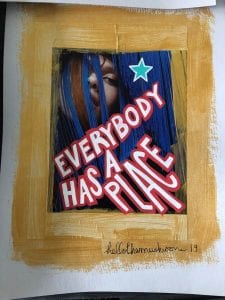
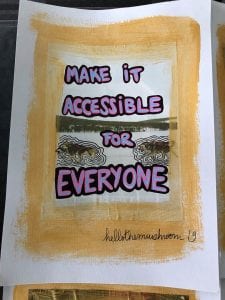
Artwork created by Hello The Mushroom at #trulondon reflecting track discussions about diversity, and available for sale at https://www.instagram.com/hellothemushroom/