

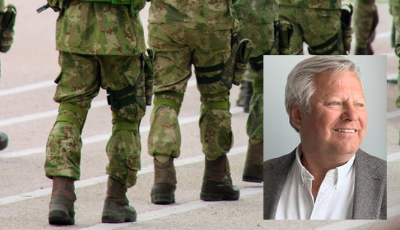
 Military personnel make a conscious decision to serve their country, and in many cases, that means putting their lives at risk. Sounds a bit dramatic, doesn’t it? But as a Royal Navy veteran, I can speak from experience. I was just 19 years old when I went to the Falklands and 21 when I went to the Middle East.
I left the Royal Navy at 24, convinced I was the bee’s knees. I’d travelled the world, experienced situations most people would never encounter and developed skills that I believed would stand me in good stead for civilian employment.
How wrong I was.
Like most people leaving the Armed Forces, I went through the normal process of looking for work. I put together my own CV, sent it off to potential employers and recruitment agencies, and waited for the phone to ring.
Very little happened.
When I did hear back, the opportunities were predominantly in security. It seemed that because I’d served in the military, that was where people thought I belonged. My wider experience, the responsibilities I’d held and the skills I’d developed were largely overlooked.
I was being pigeonholed, and at the time, I didn’t really understand why.
Fast forward more than 40 years, and as a self-employed professional CV writer specialising in military-to-civilian transitions, I see many of the same problems today.
What I’ve come to realise is that this is very much a two-way street.
On one side, you have highly capable military personnel who often struggle to explain how their experience and skills translate into civilian employment. On the other, you have recruiters and employers who don’t necessarily understand how the military operates, the responsibilities people hold or, perhaps most importantly, the way military personnel are trained to think, solve problems and make decisions.
Both sides are missing something, and the result is that some very capable people are being overlooked.
Preparing for Civvy Street
Let’s start with how the military prepares its people for civilian employment.
I’m not going to bore you with every detail of the resettlement process, but there are a few important points worth understanding.
Whether someone is leaving after a full military career, perhaps 22 years of service, or has decided earlier that it’s time to move on, they’ll normally go through a resettlement programme, with the support available depending on their length of service and circumstances.
For many, this preparation can begin well over a year before they actually leave.
The Career Transition Partnership (CTP) provides employment support, including career guidance, CV writing workshops, interview preparation, job-search assistance and access to training opportunities. Depending on eligibility, Service leavers can also receive time away from their normal duties and financial assistance towards approved training and qualifications.
On paper, it sounds like a very comprehensive system, and in many respects it is.
Service leavers can consider what industries they want to enter, identify qualifications they may need and begin preparing themselves for a completely different working environment.
But there’s one area that I believe deserves far more attention.
How do you take years, sometimes decades, of military experience and explain it in a way that a civilian recruiter or employer will genuinely understand?
This is where I regularly see things go wrong.
Someone might have spent 20 years in the Royal Navy, Army or RAF, managed large teams, been responsible for expensive equipment, controlled substantial budgets and made decisions in extremely demanding environments.
Yet when it comes to writing a civilian CV, they often struggle to explain the true extent of what they’ve actually done.
And why wouldn’t they?
For years, they’ve worked in an environment where everyone understands the ranks, terminology, responsibilities and expectations. They’ve never needed to explain what their role means to someone outside the military.
Then suddenly they’re expected to condense their entire career into a couple of pages and present it to someone who may have absolutely no understanding of military life.
What surprised me when I began working with Service leavers was how little time could be spent on this crucial part of their transition.
I’ve encountered people whose CV preparation has consisted of a relatively short workshop, sometimes just four to six hours, delivered by someone with limited first-hand experience of military careers.
Now, I’m not suggesting that the people delivering these courses aren’t capable or that the resettlement system doesn’t provide valuable support. It does.
But I do question whether a few hours of general CV guidance can adequately prepare someone to translate 10, 20 or even 30 years of military experience into a completely different employment market.
And this is where the problem really begins, because if the person leaving the military struggles to explain their own experience in civilian terms, how can we expect a recruiter with no military background to recognise its true value?
It’s Not Always About Where You’ve Been, It’s About What You’ve Done
There’s another issue that civilian recruiters don’t always appreciate.
Depending on their role, military personnel may be restricted in what they can disclose about their deployments, operations, equipment or the people they’ve worked alongside.
Some information is classified, some is operationally sensitive, and some simply isn’t appropriate to share.
So how on earth do you write a CV covering the last 20 years when there are things you can’t talk about?
The answer is actually quite straightforward, although it takes a different way of thinking.
It’s not necessarily about where someone served or what particular equipment they operated. It’s about how they carried out their responsibilities and what they achieved.
How did they manage their teams? How did they organise resources, control budgets, solve problems, communicate with colleagues or collaborate with internal and external stakeholders?
What decisions did they make? What improvements did they introduce? What were they accountable for, and what was the outcome?
These are the questions that matter.
Whether someone served aboard a Vanguard-class submarine supporting the UK’s nuclear deterrent or worked as an engineer in an Army tank regiment, the underlying skills may be highly relevant to civilian employers.
The environment is different, certainly, but leadership, engineering, operational planning, logistics, communication, risk management and problem-solving are not exclusive to the military.
In fact, many of these skills are exactly what civilian employers are looking for.
The difficulty is getting both sides to recognise that.
Now Let’s Look at the Other Side of the Coin
Imagine you’re a recruiter working for a company looking to appoint an Operations Director.
You receive a CV from someone who has completed 28 years in the British Army. Their final rank was Lieutenant Colonel, and their last appointment involved working with NATO.
The CV has been professionally prepared, uses relevant terminology, demonstrates the appropriate skills and has made it through the employer’s initial screening process.
It lands on your desk.
Now, what are you thinking?
For some recruiters, the military background might immediately create a degree of uncertainty.
Lieutenant Colonel. NATO. Twenty-eight years in the Army.
What exactly has this person been doing? Have they commanded troops in combat? Are they used to giving orders? Will they fit into a commercial business? How will they respond to someone challenging their decisions?
And what about those deployments described simply as various overseas locations?
Before you know it, the recruiter’s imagination is running away with them, and the candidate is beginning to sound like James Bond.
STOP.
This is a normal person applying for a job.
They aren’t necessarily going to walk into the interview barking orders, demanding everyone stand to attention or trying to take command of the organisation.
They’re someone who has spent their career working for one employer, in this case the Ministry of Defence, and is now considering moving to another.
Yes, their working environment may have been very different. Yes, they may have operated under extraordinary pressure and been responsible for situations most civilians will never encounter.
But why should that make them unsuitable for a senior civilian position?
In many cases, surely it should make us want to understand more about what they have to offer.
Let’s forget the rank for a moment and look at the responsibilities.
This individual may have managed hundreds of personnel, controlled substantial budgets, coordinated complex operations, worked alongside international organisations, managed risk and made decisions where the consequences of getting things wrong were considerable.
They may have been responsible for operational performance, strategic planning, resource allocation, staff development and delivering results against demanding objectives.
Now read that again, but without thinking about the Army.
Doesn’t that sound like someone who could potentially have the experience required of an Operations Director?
Of course, military rank alone doesn’t qualify someone for a senior commercial position. They still need to demonstrate the relevant skills, understand the organisation and show how their experience applies to the role.
But that’s precisely what the recruitment process should establish.
The problem isn’t necessarily a lack of relevant experience. It’s that the experience is sometimes being judged through the wrong lens.
Military Leadership Isn’t Simply About Giving Orders
Another misconception I regularly encounter is that military leadership is all about command and control.
Of course, there are situations where orders must be followed immediately. When lives are at risk, there isn’t always time for a committee meeting.
But military leadership involves far more than that.
Think about what it takes to manage a team of people operating in difficult circumstances, often away from home, sometimes under considerable pressure and frequently with limited resources.
You need to communicate clearly, understand people’s strengths and weaknesses, motivate individuals, resolve disagreements, make difficult decisions and take responsibility when things go wrong.
You need to work with people from different backgrounds, cultures and organisations, often across international boundaries.
You need to plan, adapt, listen, collaborate and sometimes change direction very quickly.
Does any of that sound unfamiliar to someone running a business?
It shouldn’t.
I’m certainly not suggesting that every former military person will make a brilliant civilian manager. That would be ridiculous.
Just as in civilian employment, people have different abilities, personalities, strengths and weaknesses.
What I am saying is that military experience should be properly understood and assessed rather than judged on assumptions about rank, uniform or service history.
What Should Recruiters and Employers Do Differently?
I don’t believe recruiters need to become military experts. But I do believe they need to approach military applicants with an open mind and ask better questions.
Look beyond the rank. A rank tells you something about someone’s military career, but it doesn’t explain the full extent of their responsibilities. Ask about the number of people they managed, budgets they controlled, decisions they made and results they delivered.
Concentrate on transferable skills. Leadership, communication, logistics, engineering, project management, operational planning, risk management and problem-solving are all relevant to civilian employment. The fact that these skills were developed in a military environment doesn’t make them less valuable.
Don’t make assumptions about personality. Someone who has spent 25 years in the Armed Forces isn’t automatically authoritarian, inflexible or unable to work in a civilian team. Get to know the individual before making that judgement.
Ask about achievements, not just duties. Rather than asking someone to explain a military operation they may not be able to discuss, ask how they managed their responsibilities, what challenges they faced and what they achieved.
Recognise that the terminology is different. A military candidate might describe operational readiness, personnel deployment or mission planning. Look at the underlying responsibilities and consider how they relate to your organisation.
And perhaps most importantly, remember that you’re interviewing someone for what they can contribute to your business in the future, not simply what they did in the military.
And What About the Person Leaving the Military?
Now, I can’t put all the responsibility on recruiters and employers.
As I said earlier, this is a two-way street, and Service leavers have an equally important part to play.
If you’re leaving the Armed Forces, you cannot expect a civilian recruiter to understand every military rank, qualification, acronym or appointment.
It’s your responsibility to help them understand what you can offer.
Start by deciding what you actually want to do. Don’t assume that because you’ve spent 20 years in a particular military role, you must find its nearest civilian equivalent. Your experience may open doors to industries and positions you’ve never considered.
Learn to explain your responsibilities in civilian language. Instead of relying on military terminology, describe the people, resources, budgets, projects and operations you’ve managed.
Focus on achievements. What did you improve? What problems did you solve? What results did you deliver? Where possible, use figures to demonstrate the scale and impact of your work.
Understand the jobs you’re applying for. Read the job descriptions carefully, identify the skills employers are asking for and make sure your CV clearly demonstrates the relevant experience you possess.
Prepare properly for interviews. You may have spent years being assessed within the military, but civilian interviews can be very different. Practise explaining your experience without assuming the interviewer understands the military environment.
And please, don’t undersell yourself.
One of the things I’ve noticed when working with military clients is how often they describe substantial achievements as simply doing their job.
They’ll tell me they were only responsible for a team of 40 people, only managed a multimillion-pound budget or only coordinated a complex operation.
Only?
Those are significant responsibilities, and they deserve to be presented properly.
At the same time, don’t expect your military service alone to secure you a position. Employers need to understand what you can do for them, and that’s what you must demonstrate.
Where Professional Guidance Can Make a Difference
As a professional CV writer and Royal Navy veteran, I have the advantage of understanding both sides of this challenge.
I know what military life involves, but I’ve also spent decades in business, including senior management, recruitment and interviewing.
When I work with someone leaving the Armed Forces, I don’t simply take their military CV and replace a few words with civilian terminology.
We spend a considerable amount of time talking.
I want to understand where they’ve been, what they’ve done, how they’ve done it and, most importantly, where they want to go next.
I’ll ask about leadership, budgets, operational responsibilities, achievements, challenges and the decisions they’ve made.
Quite often, it’s only through these conversations that we begin to uncover the true extent of someone’s experience.
We then work together to translate that information into a professionally written, ATS-friendly civilian CV, using language that recruiters and employers can understand.
But I believe the coaching is just as important as the document itself.
I explain how Applicant Tracking Systems work, how to tailor a CV to different vacancies, how to identify relevant keywords and how to present achievements in a way that makes sense to a civilian audience.
I also provide cover letter support and LinkedIn optimisation, including personal guidance on recruiter visibility and the settings behind the profile.
The aim isn’t simply to produce a good CV. It’s to give someone the knowledge and confidence to present themselves effectively throughout their civilian career.
And that, to me, is what good resettlement support should ultimately achieve.
So, Are UK Recruiters Really Overlooking Military Talent?
I believe some are, yes.
But I don’t think it’s necessarily deliberate, and I certainly don’t believe it’s entirely the recruiter’s fault.
The problem is often a lack of understanding on both sides.
Military personnel have spent years working in an environment with its own language, structures and expectations. Civilian recruiters are assessing candidates against commercial requirements, often with little knowledge of how military responsibilities translate into those requirements.
Somewhere between the two, valuable experience gets lost.
And that’s a real shame.
We’re talking about people who may have spent decades leading teams, managing resources, solving problems, adapting to changing circumstances and taking responsibility for difficult decisions.
These aren’t skills that disappear the moment someone takes off their uniform.
But equally, they aren’t skills that an employer should be expected to recognise without a clear explanation.
Service leavers need to learn how to communicate their experience, and recruiters need to learn how to recognise it.
For recruiters, that means challenging assumptions, looking beyond military terminology and asking questions that uncover genuine capabilities.
For those leaving the Armed Forces, it means understanding the civilian employment market, identifying relevant achievements and learning to explain them in language that employers recognise.
Neither side needs to make the process complicated. Both simply need to make more of an effort to understand the other.
I started this article by explaining how, at 24 years old, I left the Royal Navy believing I had a great deal to offer, only to find myself being considered predominantly for security positions.
More than 40 years later, I still see capable military people facing similar difficulties.
And that’s why I feel so strongly about this subject.
I don’t believe former military personnel deserve preferential treatment when applying for civilian employment. They deserve something much more straightforward: a fair opportunity to demonstrate what they can do.
Not because they’ve worn a uniform, not because of their rank and not because of where they’ve served.
But because of the skills, experience, knowledge and potential they can bring to an employer.
After all, someone who has spent 20 years leading people, managing resources and delivering results doesn’t suddenly lose those abilities because they’ve left the Armed Forces.
The uniform may have changed, but the person and their experience haven’t.
About the Author
John Logan is an independent UK professional CV writer, career mentor and Royal Navy veteran who served during the Falklands conflict. With over 40 years of business experience, including senior leadership and recruitment, he works with clients across the UK, from graduates and skilled professionals to senior executives, company directors and those transitioning from the Armed Forces into civilian employment.
His highly consultative approach combines bespoke, ATS-optimised CV writing, professional cover letters, LinkedIn optimisation and personalised career coaching.
John has been featured on ITV Meridian South as a CV writing expert and has received 185 five-star client reviews.